
Bladder Cancer
The #1 risk for bladder cancer is cigarette smoking
According to the American Cancer Society, bladder cancer is the fourth most common type of cancer in men. It’s less common in women, but women are more likely to present with advanced tumors. It occurs mostly in older people (average age at the time of diagnosis is 73).
What is bladder cancer?
Urine produced by your kidneys flows into your bladder, which is lined with a specialized tissue called the urothelium. This lining is made up of cells that expand as the bladder fills and contract when it empties.
Bladder cancer develops when cells within this lining undergo changes (mutations) and begin to grow abnormally, forming tumors inside the bladder. If not treated, the cancer can spread through the bladder wall to nearby lymph nodes and potentially to other parts of the body, such as the bones, lungs, or liver.
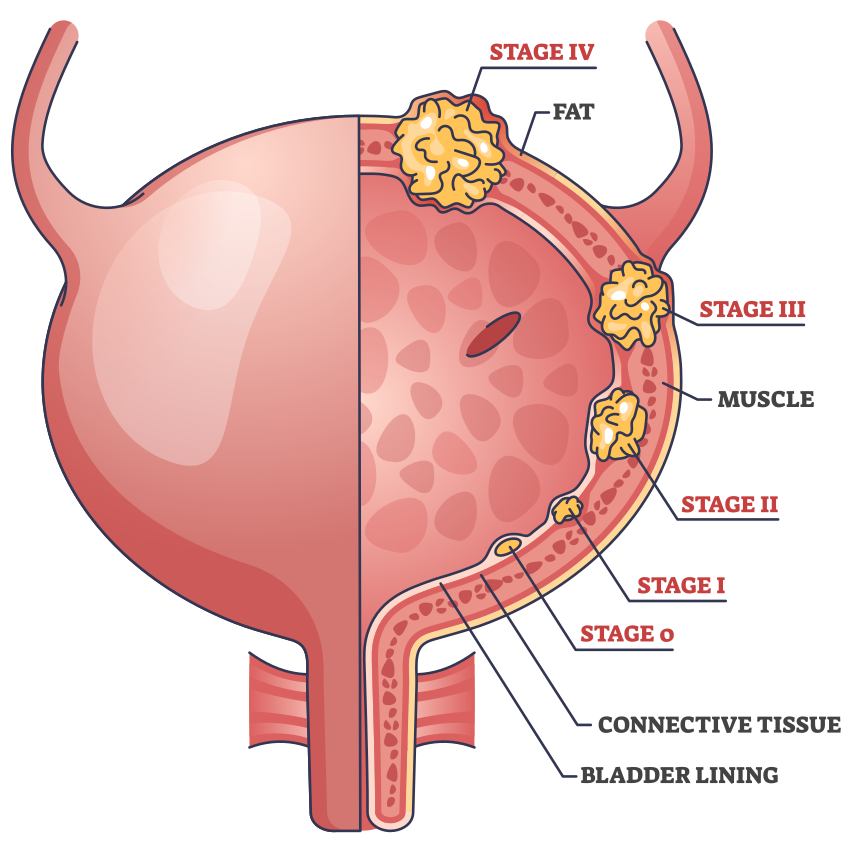
Types of bladder cancer
Transitional cell carcinoma
Starts in the urothelial cells lining the inside of the bladder and accounts for approximately 90% of all bladder cancer cases. In this form, abnormal cells can grow beyond the inner lining into deeper layers of the bladder or extend through the bladder wall into the surrounding fatty tissue. It is also referred to as urothelial bladder cancer.
Squamous cell carcinoma
Squamous cells are thin, flat cells found in the lining of the bladder. This form of bladder cancer makes up about 5% of cases and most often develops in individuals who have experienced chronic bladder inflammation or prolonged irritation.
Adenocarcinoma
Develops from glandular (secretory) cells. This is a very rare type of bladder cancer representing about 1–2% of cases.
Small cell carcinoma
Begins in neuroendocrine cells and often grows quickly. Extremely rare type of bladder cancer that affects about 1,000 people in the U.S.
Sarcoma
Rare cancer that starts in the muscle cells of the bladder.
Classification by growth pattern and invasiveness
Non-muscle invasive bladder cancer (NMIBC)
This refers to bladder cancer that’s moved deeper into your bladder but hasn’t spread to muscle.
Muscle-invasive bladder cancer (MIBC)
This bladder cancer has grown into bladder wall muscle and may have spread into the fatty layers or tissues on organs outside of your bladder.
Noninvasive
This bladder cancer may be tumors in a small section of tissue or cancer that’s only on or near the surface of your bladder.
Risk factors to develop bladder cancer
Cigarette smoke
Tobacco smoke releases toxins into the bloodstream that are filtered by the kidneys and concentrate in the bladder, damaging the lining. Smokers are 3x more likely to develop bladder cancer than non-smokers.
Exposure to certain chemicals
Studies show that people who work with certain chemicals used in dyes, rubber, leather, paint, some textiles and hairdressing supplies may have an increased risk. High-risk jobs include painters, machinists, printers, hairdressers, and textile workers.
Radiation exposure
Radiation therapy to treat cancer may increase your risk of developing bladder cancer.
Prior cancer (radiation) treatment
Radiation therapy to treat cancer may increase your risk of developing bladder cancer.
Prior cancer treatment (radiation/chemotherapy)
Radiation therapy to treat cancer may increase your risk of developing bladder cancer, and certain chemotherapy drugs may also increase your risk.
Frequent bladder infections
People who have frequent bladder infections, bladder stones or other urinary tract infections may be at an increased risk of squamous cell carcinoma.
Diagnosis and tests
Urinalysis
A variety of tests are done yo analyze your pee. A urinalysis may be done to rule out infection.
Cytology
Cells are examined under a microscope for signs of cancer.
Cystoscopy
This is the primary test to identify and diagnose bladder cancer. For this test, a pencil-sized lighted tube called a cystoscope to view the inside of your bladder and urethra. They may use a fluorescent dye and a special blue light that makes it easier to see cancer in your bladder. Tissue samples may also be taken while doing cystoscopies.
If your urinalysis, cytology, and cystoscopy results indicate bladder cancer, additional tests may be performed to gather more detailed information about the disease. Providers use these findings to determine the cancer’s stage, which helps guide treatment decisions and establish a prognosis, or expected outcome.
Contact us if anything feels “off,” especially when it comes to changes in urination.
To learn more, contact a provider or one of our locations — or schedule an appointment.