

Testicular Cancer
What is testicular cancer?
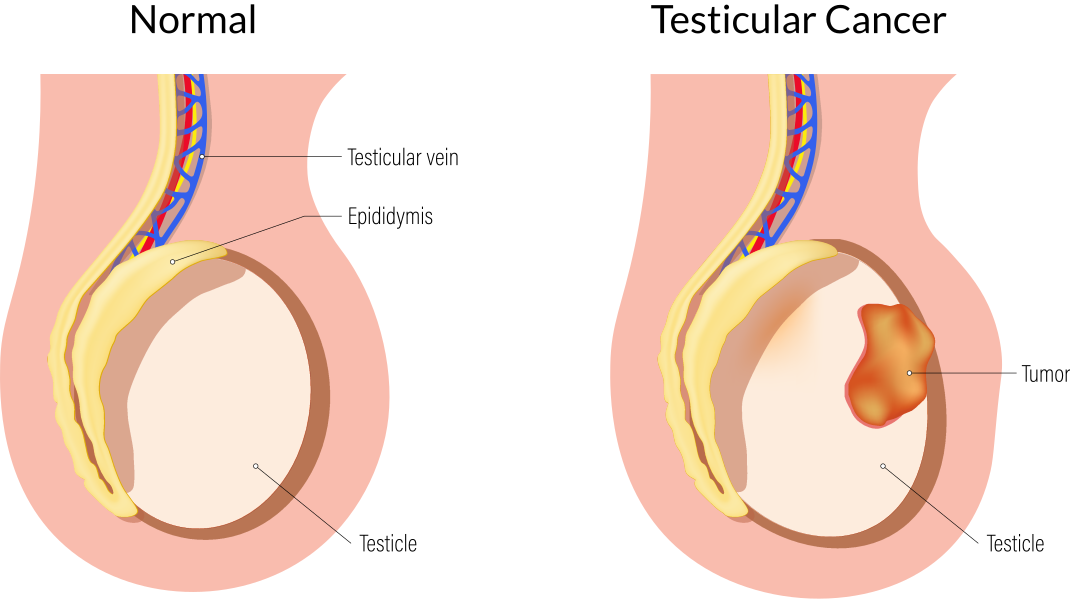
Testicular cancer occurs when abnormal cells begin to grow in the testicles. The testicles, also known as testes, are located inside the scrotum—a loose pouch of skin beneath the penis. They play an important role in producing sperm and the hormone testosterone.
One of the earliest signs is often a lump or swelling in a testicle. Testicular cancer cells can grow rapidly and may spread beyond the testicle to other parts of the body if not treated.
Symptoms
- A lump or swelling in either testicle
- A feeling of heaviness or fluid buildup in the scrotum
- Dull ache or pain in the lower abdomen or groin
- Sudden swelling in the scrotum
- Pain or discomfort in a testicle or the scrotum
- Breast tenderness or growth
- Back pain
Usually testicular cancer only happens in one testicle.
Risk factors
Testicular cancer has no known definitive cause, but primary risk factors include:
- Undescended testicle (cryptorchidism): The testicle does not drop into the scrotum before birth. The risk is increased even if you've had surgery to move the testicle to the scrotum.
- Family history: If testicular cancer runs in your family, you might have an increased risk.
- Being a young adult: Most common in men aged 15-35.
- Being white: Testicular cancer is most common in white people.
Diagnosis
Ultrasound
A testicular ultrasound uses sound waves to create images of the scrotum and testicles. During the test, you lie on your back while a healthcare provider applies gel to the scrotum and moves a handheld probe over the area to capture images. This test helps your provider evaluate lumps or abnormalities and determine whether they appear benign or potentially cancerous. It can also show whether a lump is inside or outside the testicle—lumps inside the testicle are more likely to be testicular cancer.
Blood tests
A blood test can detect certain proteins produced by testicular cancer cells. This test is known as a tumor marker test. Common tumor markers for testicular cancer include beta-human chorionic gonadotropin (β-hCG), alpha-fetoprotein (AFP), and lactate dehydrogenase (LDH). Elevated levels of these substances do not necessarily mean you have cancer, but they can provide important clues that help your healthcare team better understand what may be happening in your body.
Surgery to remove a testicle
If your physician suspects that a lump on your testicle may be cancerous, surgery may be recommended to remove the testicle. The removed tissue is then sent to a laboratory for testing to determine whether cancer is present.
Target cancer stem cells early. Let’s discuss personalized treatment plan for you.
To learn more, contact a provider or one of our locations — or schedule an appointment.